
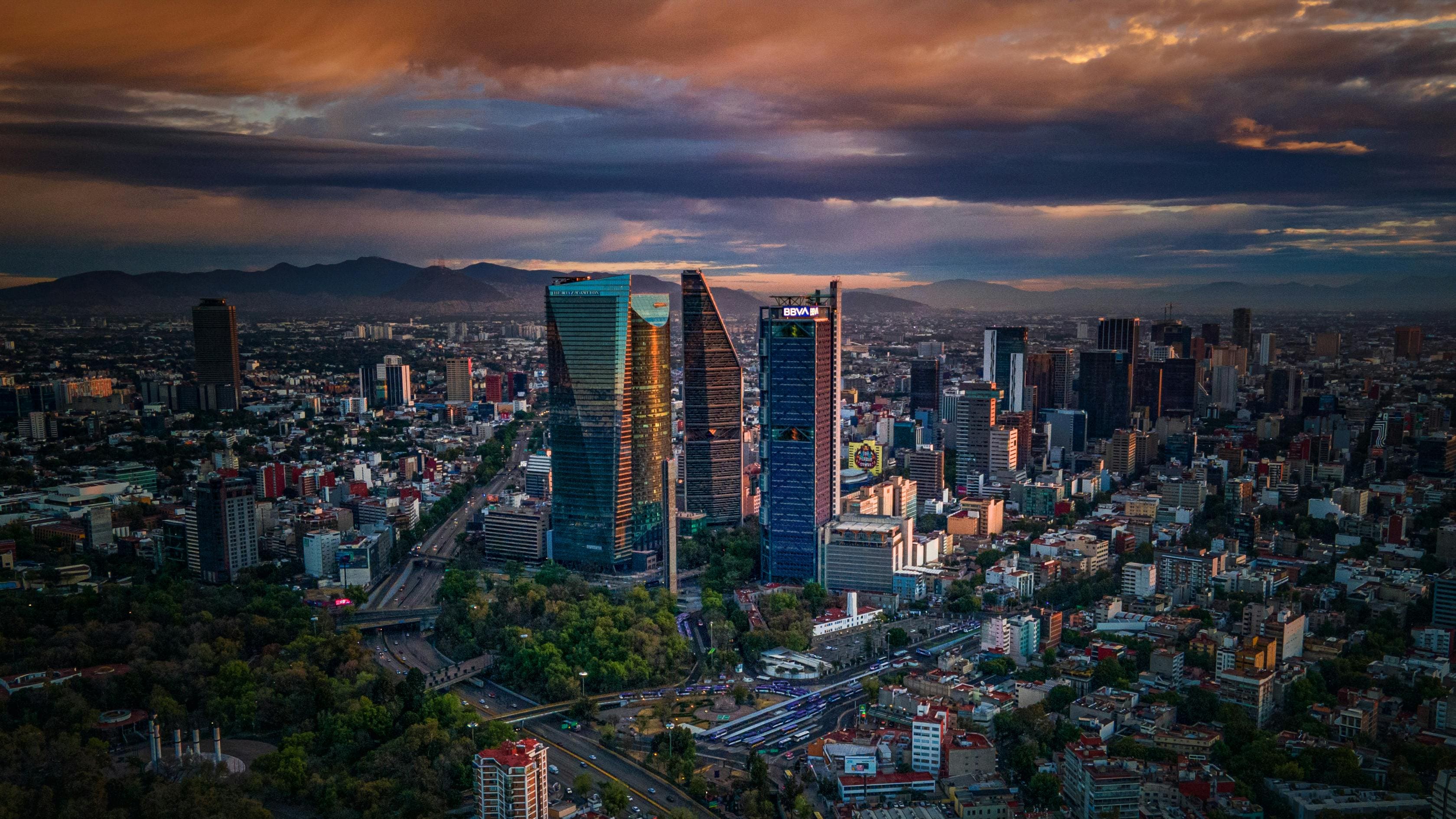
Mexico City, Mexico.
Overview & Benefits
Mexico does not have a formal digital nomad visa. In practice, remote workers usually go through the Temporary Resident Visa route and prove economic solvency to the consulate where they apply.
That distinction matters. Mexico is not offering a single nationwide nomad program with one published income floor. Instead, each mission publishes its own checklist, and the solvency bar can be noticeably different from one consulate to another.
For a recent U.S. consulate example, the benchmark is roughly:
- Monthly net income: MXN 83,640
- Average monthly bank balance: MXN 1,394,000
Those numbers are not universal, but they are a good reality check. If your file only barely clears the threshold, expect the consulate to care a lot about statement quality, consistency, and the source of funds.
The practical stay structure is:
- Visa entry: up to 6 months
- Temporary Resident Card: up to 4 years
After entry, you must exchange the visa for the resident card with INM within the local deadline. If you miss that step, the plan falls apart fast.
The other big line to respect is work authorization. The visa itself does not permit paid work in Mexico. If you will be paid by a Mexican employer or client, you need separate INM authorization. For founders and nomads whose income is foreign-source, that is usually the key distinction.
Mexico also does not give digital nomads a special tax holiday. The Federal Fiscal Code uses a home and center-of-vital-interests test, and that center can shift to Mexico if most of your annual income is Mexican-source or your main professional activity is in Mexico. For people thinking about a longer stay, the tax question needs to be part of the visa decision, not an afterthought.
Family members are usually handled through family unity or dependent procedures, not as an automatic add-on to the main file. And because banks are conservative, do not assume you will get a fully functional account on day one without the Temporary Resident Card and a local address.
The route is useful, but it is not a casual nomad sticker. It works best for people who can prove clean foreign income, tolerate consulate-specific rules, and want a longer base in Mexico without pretending the tax and work rules do not matter.
Long-stay route for remote workersTemporary Resident Card can run up to 4 yearsFamily unity route is available
Best for
This visa structure provides the highest ROI for these specific profiles:
Remote employeesFreelancersFoundersLong-stay base seekers
Main Requirements
To qualify for the Temporary Resident Visa, you must meet the following criteria:
- Mexico does not have an official nationwide digital nomad visa. In practice, most remote workers use the Temporary Resident Visa and satisfy a consulate-specific economic solvency checklist.
- You need to prove solvency through the mission where you apply. A recent U.S. consulate benchmark is either at least MXN 1,394,000 in average monthly bank balances over the last 12 months or at least MXN 83,640 in monthly net income over the last 6 months.
- The visa does not authorize paid work in Mexico. If you want to be paid by a Mexican person or entity, you need INM work authorization.
- If you are not a national of the country where you apply, you usually need to prove legal residence there.
- You need a passport, visa application form, photo, and the supporting financial documents requested by the mission. Some consulates also ask for apostilles, legalizations, or Spanish translations.
- If you plan to bring family members, they usually apply through family unity or a dependent checklist tied to the main resident.
- After entry, you must exchange the visa for a Temporary Resident Card within the local INM deadline.
Reality Check: Rejections & Delays
Real Approval Difficulty
Medium to Hard. The legal concept is simple, but the real friction is consulate variance and the work-permit distinction.
Actual Timeline
Some missions publish a decision window of up to 10 business days for a complete file, but appointment availability and follow-up requests often matter more.
Common Rejection Reasons
- Your bank balances or income do not clear the local consulate threshold.
- The statements do not cover the required period or are not official enough.
- Your file suggests you will do paid work in Mexico without INM authorization.
- You cannot prove legal residence in the country where you are applying.
- Apostille, legalization, translation, or family documents are missing.
- The INM card exchange is missed after arrival.
Biggest Downside
The biggest risk is assuming one universal threshold applies everywhere. In Mexico, the consulate checklist is often the whole game.
How to Apply (Step by Step)
1
Check the Mission Rules
Confirm the exact solvency benchmark and document list for the consulate where you will apply, because Mexico does not use one universal number.
2
Build the Proof Package
Gather passport, photo, application form, bank statements, income evidence, legal-residence proof if needed, and any translations or legalizations the mission wants.
3
Attend the Consular Interview
Submit in person, pay the fee, and be ready to explain where your income comes from and whether any work will be paid in Mexico.
4
Convert the Visa in Mexico
After entry, go to INM within 30 calendar days to exchange the visa for your Temporary Resident Card.
Tax & Banking Reality
Can this lead to tax residency?
Mexico does not offer a special digital nomad tax regime. Under the Federal Fiscal Code, tax residence is based on where your home or center of vital interests is located, and that center can be in Mexico if more than 50% of your annual income has Mexican source or your main professional activities are in Mexico. If you cease to be resident, Mexico also expects a notice of residence change. In practice, nomads should track both source of income and where their real home base sits.
Do banks accept this visa?
Bank onboarding is inconsistent. Many banks want the Temporary Resident Card, passport, local address and proof of income before they will open a usable account.
Frequently asked questions
Does Mexico have a real digital nomad visa?
No. Mexico does not have a dedicated digital nomad visa. Most remote workers use the Temporary Resident Visa based on economic solvency.
Can I work remotely for a foreign company?
Usually yes in practice if your file is built around foreign income, but the visa itself does not authorize paid work in Mexico. Mexican-paid work needs INM authorization.
Can my spouse or children come with me?
Usually yes. Family members are typically handled through family unity or dependent procedures tied to the main resident.
How long can I stay?
The visa gets you into Mexico, then you exchange it for a Temporary Resident Card that can be issued for up to four years.
Is there a special tax break?
No. Mexico uses its normal tax residency rules, so the move should be planned as a tax residence decision, not a tax holiday.